My Anti-Racist Evolution
On "Racial Realism" and shifting what it means for me to do this work


One of my favorite online voices and educators, Feminista Jones, posted an article this week where she quoted this line from legal scholar and philosopher Derrick Bell: “Racism is an integral, permanent, and indestructible component of this society.” She went on to talk about how he outlines in his book, Faces at the Bottom of the Well (1992), this theory called “Racial Realism”, which she says is “the idea that Black people must recognize that racism is permanent but we should keep fighting for justice, equal rights, etc.” This book has actually been on my shelf for a while; I just haven’t gotten to it yet. But reading that article made me feel like I need to move it up on my TBR list.
What she went on to describe in the post gave words to a feeling I’ve had since the November 2024 election; I just didn’t know how to express it. But the truth is that when Kamala Harris lost the election, I lost all hope that I would see racism eradicated in my lifetime. Something inside me broke, and I felt an ache whose depth can only be understood as ancestral. For those who know me, you may be surprised to learn that I feel this way. The thing is, I picked up on the pattern of what seemed like advances in racial progress being followed by swift and harsh backlash. This backlash comes from white dominance culture.
*By the way, I will no longer be referring to it as “white supremacy culture” because the idea of supremacy is a lie that exists to maintain cultural hierarchy, and I think it’s important to be intentional about the language I use, so as not to reinforce harmful belief patterns.*
But this pattern, this back and forth, can be observed all throughout history. From the time slavery was supposedly abolished to now (to understand why I say supposedly, I recommend reading the book The New Jim Crow and/or watching Ava DuVernay’s documentary 13th). If you’re paying attention, you can see that we’re currently in the backlash wave that is the response to the election of a Black president. There have been so many efforts by this administration to erase the history and legacy of that accomplishment. I would actually argue that these efforts are not only to erase it, but also to punish us and discourage us from believing such an accomplishment could ever occur again.
The first presidential election I voted in was the 2012 election, and of course, my friends and I were all excited to cast our ballots for Barack Obama’s second term. I wasn’t super engaged politically during my early college years, but I paid enough attention to know that I needed to make sure I voted even while I was in a different state. Especially since it was an opportunity to elect the first Black president of the United States to his second term. I remembered being bummed out about not being old enough to vote for him in 2008, when I was a sophomore in high school, so I was very excited to participate. I didn’t understand the political implications of elections then, but I was raised to know the importance of casting a vote. It was also one of the earliest times I witnessed and understood what racial backlash looked like.
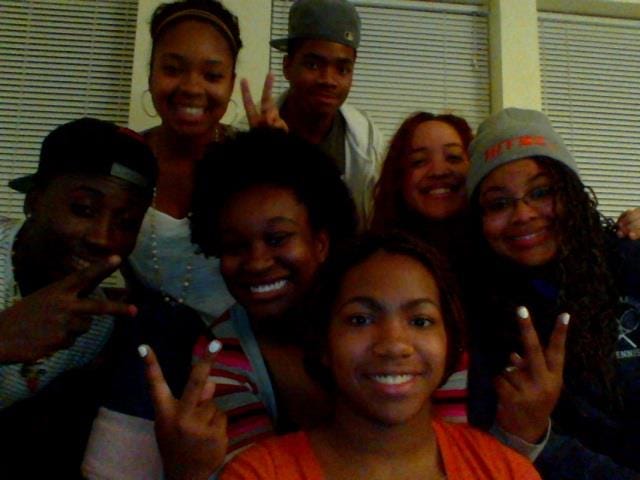
It’s funny, my family lovingly calls me militant now, but what outcome could they have expected from how they raised me? They were casually pro-Black, in the way most culturally conscious Black people are, my entire life. They also had backgrounds in labor advocacy and education. I grew up witnessing poverty firsthand, in Flint, MI, a predominantly Black city, and then moved to a middle-class, mostly white but still somewhat diverse suburban area for high school. I noticed many differences in those environments, from the way the neighborhoods looked to the quality of my education and school resources. I didn’t yet understand the intersecting racial and socioeconomic components, though. I then went to a predominantly white college in upstate New York, but I immersed myself in Black culture there, even living in the dorm that was for what they called the AALANA community: African-American, Latin-American, and Native-American.
My parents did their best to equip me so I could navigate being in predominantly white spaces, but they didn’t know what they didn’t know. What they tried to instill in me (and did) was a sense of pride in my Blackness. So yeah, it only makes sense that social activism feels natural to me. In high school and throughout my twenties, I participated in protests, community conversations, and change efforts in various formats. There was even a time when I wanted to pursue being what I thought was a “professional activist”. I was coming of age during the early stages of internet influencers, but I was also interested in many other things, so I never seriously went after it. What was consistent was a deep desire to improve conditions and outcomes for Black people.
When I had the opportunity to participate in diversity, equity, and inclusion (DEI) work at my previous organization in 2019, it seemed like I had finally found the path that would allow me to push for change in a way where I would actually see the impact. And in the 6 years I did that work, I worked hard to champion meaningful change efforts within the organization’s culture, to make it a more inclusive environment for both staff and the members we served. Over those years, it got to the point where I cared more about the DEI work than anything else in my job description. Technically, DEI work wasn’t even in my job description. Which was its own issue, but that’s not the point of this post. I just want to acknowledge that even within the DEI space, and even when going deeper into anti-racist frameworks, I always felt turned off by the fact that most DEI conversations and efforts still seemed to center around whether or not white people were comfortable, or whether the content would be palatable to white audiences. It seemed like that was the wall we kept hitting with every effort, and it was extremely frustrating.
It never made sense to me that the work was supposed to be led by people who looked like me, but our perspectives, and those of other marginalized people, were never at the center. I didn’t have the language or depth of understanding then to articulate this in a way that could convince leadership to shift the dynamic, but I now understand that it is simply a limitation that exists within the framework. I would posit that this limitation is due to the fact that DEI work assumes racism can be eliminated within our structures and social systems. It exists even within anti-racism work, where the goal of the approaches I learned about still felt centered around educating white people in hopes that they would unlearn racism. It was done in a way that was perhaps more sensitive to the experiences of those from marginalized communities, but it still didn’t center our empowerment.
And now, it’s not that I don’t think DEI and anti-racism work is important or that it doesn’t have a positive impact overall. I think it does, when people are truly receptive and actually want to change. The problem is that I don’t believe most white people actually want to change. That belief was solidified by my experiences in my previous organization and by the results of the 2024 election. The sad thing is that I don’t think it’s simply a matter of morality or ethics. I don’t think it’s as simple as a majority of white people hating everyone else, though that was how I felt at first. But as time has gone on, and as we’ve seen all that this current administration has done, I had to ask myself why? Why would they hate people who are different this much, to subject us all to this? The only logical conclusion I’ve been able to come to so far is that I think most people, including some people from marginalized communities, just don’t understand the way that white dominance culture functions and that it harms all of us, so they don’t understand why it is important to work to dismantle it. And this is, of course, by design. From our education system to the laws and policies that shape our culture, we are all indoctrinated in some ways because it is necessary to maintain the status quo in the United States.
When faced with this realization, I had a lot to think about as far as how I want to show up in the world, and what social justice work would look like for me going forward. I had even decided to step down from co-chairing my organization’s DEI committee. I was done doing work that centers around white people. That, again, reflects the true insidious nature of racism. It orients us around white dominance culture. It influences not only how we exist, but the very way we think about and understand the world around us. I now believe that true empowerment comes from deeper knowledge of self. But white dominance culture keeps us from knowing ourselves. It tries to homogenize us, but we were never meant to assimilate. And honestly, they never wanted us to anyway.
What I’ve always wanted is an approach to social justice work that would be empowering to marginalized people, regardless of whether or not white people and people in dominant social positions bought into it. I had seen this idea of “decolonization” floating around social media, and I understood it to mean unlearning the frameworks and belief systems that maintain the current status quo, which disenfranchises anyone who is not at the top of the white dominance social hierarchy, meaning anyone who is not cisgender, heterosexual, white, male, and Christian.
I’ve been slowly educating myself through books and the content I consume online in my own decolonization journey for a few years now. In fact, I can trace the first seed back to my first sociology class in college, though I didn’t know that word at the time. My second sociology class was during the time of the George Zimmerman trial, after the murder of Trayvon Martin. Witnessing that case play out was an inflection point in my journey. I’ll never forget the discussion we had in class, where there were only a handful of people of color, and the distinction between how we responded to the case versus how most of the white students responded, believing that he deserved to be murdered. I’m grateful that the professor, who was a white woman, seemed to be intentional about allowing us the space to share our perspectives and making sure the class actually considered our points. It got pretty heated, though. That was also perhaps one of the earliest moments in which I realized that the rules are different for Black people in modern society, not just historically. I realized that this country is not a fair and just society, as I had been led to believe throughout my education.
Over the years, I’ve had several of those moments. Each time, it feels like a gut punch. A deeper fracturing in the foundation of my understanding of the world around me, and how I exist in it. Which is why following people like Feminista Jones has been such a salve. She recently held a series of lectures online, called “Get Free”, and one of the classes offered was about Black Radical Thought. I was excited to learn that many of the thought leaders and activists referenced in the session were people I’ve learned about previously, and people who have guided my own journey, such as Angela Davis. However, I also learned that there is so much I still have to learn. I am actually going to do another post about the entire series, so stay tuned.
While it may initially seem that accepting the idea of racism being permanent would be discouraging, I actually believe that it’s empowering. Because it then shifts us out of being oriented around whiteness, and means we have to focus on what we can do for ourselves. What does it look like to do social justice work that isn’t focused primarily on getting white people to change? For me, I think it looks like educating. We can’t embody a power we aren’t yet aware of. So moving forward, that is my goal. To write in a way that brings us back to ourselves. To help us to know and understand ourselves. To teach us why we must love ourselves and each other. It looks like continuing to educate myself. I know it will be an ongoing journey, and I hope you’ll stick with me along the way.
Love and light always,
Domi
If you’re interested in more frequent updates on what I’m learning or thinking about, follow me on Threads/Instagram/Tik Tok @DomiTheeMuse